
MODULAR MICROFACTORIESA BRAHMWORKS INITIATIVE / BENGALURU

Small-batch electronics.A connected build.

From working electronics
to a repeatable pilot build.

Assembly, programming and testing.
A process built around your product.

Explore the platformRun a virtual batch
Six-cell Brahm Machines microfactory in a minimal factory with natural daylight
THE CONNECTED MICROFACTORYCONCEPT VISUALISATION
DESIGNED FOR THE NEXT BATCHPEOPLE. PROCESS. REPEATABILITY.DISCOVER THE SYSTEM ↓
01 / THE IDEA

Your prototype works.
Your production
should too.

A working PCB is a beginning.
A repeatable build is a system.

Fixtures. Work instructions. Firmware. Functional tests. Brahm Machines connects the steps between your working electronics and a finished product.

Start with a product. Define its recipe. Reuse the infrastructure for what comes next.

How it fits together
06Process capabilities
01Shared architecture
10–500Target batch range
Subject to review
02 / THE PROCESS

Six capabilities.
One connected build.

Choose the operations your product needs. Develop each step around the actual application.

Proposed capabilities shown as concept renders. Pilot scope is defined and validated per product.

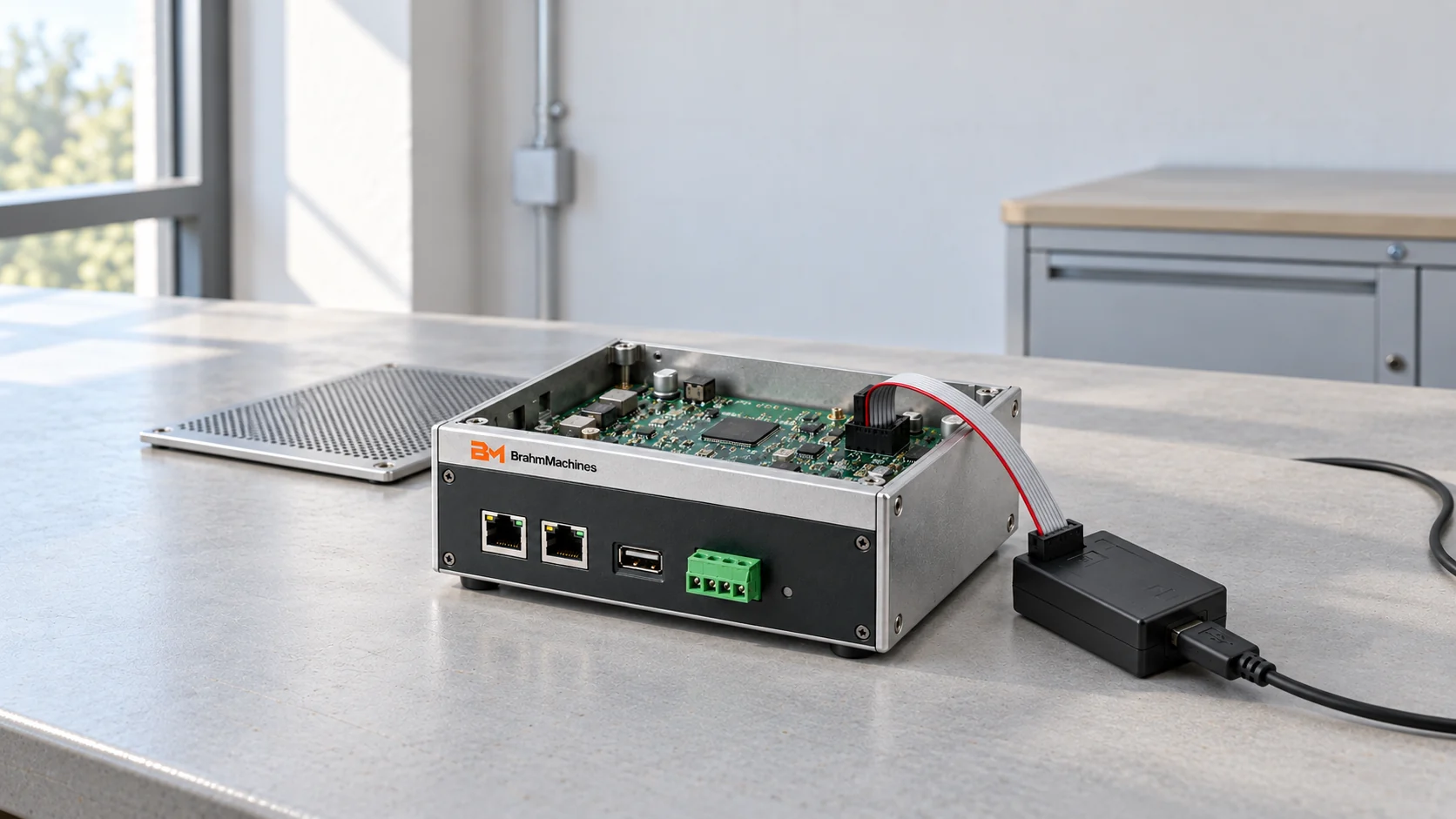
Open gateway enclosure with its circuit board, lid and assembly toolGUIDED ASSEMBLY / CONCEPT
03 / PEOPLE + MACHINES

Human judgement.
Machine consistency.

People handle variation. Connected tools and fixtures bring repeatability to the operations that need it.

Begin with one hybrid bench. Automate the bottleneck the process reveals.

Inside the Build cell
04 / APPLICATIONS

Same system.
Your product.

Three starting points for small-batch electronics. Product-specific fixtures, tests and production routes.

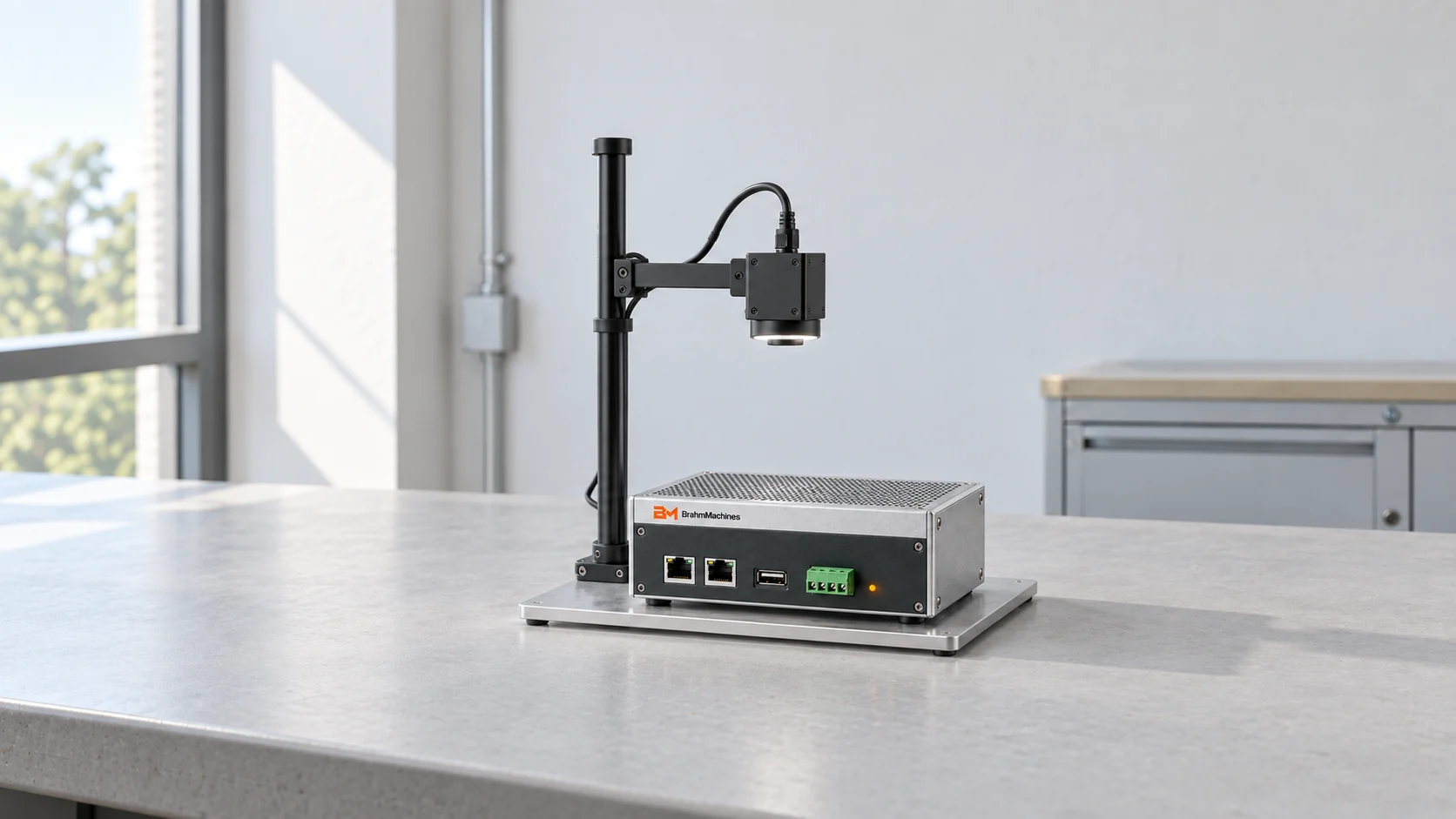
IoT gateway enclosure conceptILLUSTRATIVE APPLICATION
Connectivity in a finished enclosure

IoT gateway

Bring together the PCB, enclosure, antenna interfaces and wiring, with the programming and functional checks defined for your device.

Build →Program →Test →Pack
Discuss this application
05 / EXPLORE THE ARCHITECTURE

See how it
comes together.

Rotate the schematic, separate the modules and explore each proposed capability.

BM / MICROFACTORY SYSTEMINTERACTIVE CONCEPT
Concept rendering of the modular microfactory line

Interactive 3D is unavailable. Explore every cell using the buttons below.

DRAG TO ROTATE

01 / BuildGuided human assembly. The right instructions for the right product.

SCHEMATIC · NOT TO SCALE
06 / START WITH A PILOT

One product.
A repeatable process.

Define the build before scaling it.

Bring your existing electronics, a real batch requirement and clear acceptance criteria. Together, we can scope the first practical step.

01

Define

Product, batch and acceptance criteria.

02

Prepare

Fixture, work instructions and recipe.

03

Build

Assembly and selected process operations.

04

Verify

Agreed tests, inspection and release.

Define your pilot
BEFORE THE FIRST BATCH

Make the next step clear.

Explore small-batch electronics pilot production and prepare the information your process needs.

GUIDE / 01

An electronics pilot production checklist

Before a pilot, agree the product revision, build instructions, firmware, test limits and release criteria. A working prototype is the starting point; the pilot should establish whether another person can build and verify the same product from controlled information.

Read the guide
GUIDE / 03

What belongs in an electronics production record?

A useful production record connects a unit’s identity to the process that built and checked it. Retain the relevant product and recipe revisions, operation results, failed attempts, rework and release decision so the history remains understandable after the batch leaves the bench.

Read the guide
START WITH ONE PRODUCT

What are you
building next?

Bring the working electronics.
Let's define the process around them.

Discuss your pilotNo machine purchase required to start a conversation.