
THE PLATFORM

Modular microfactories.
Built around your product.

A common physical foundation. Product-specific tools and recipes. A modular approach to getting from working electronics to finished products.

Six connected production cells on a clean studio background
Concept visualisation
INTERACTIVE EXPLORER

Explore the architecture.

Drag to rotate. Select a cell to see its role.

BM / MICROFACTORY SYSTEMINTERACTIVE CONCEPT
Concept rendering of the modular microfactory line

Interactive 3D is unavailable. Explore every cell using the buttons below.

DRAG TO ROTATE

01 / BuildGuided human assembly. The right instructions for the right product.

SCHEMATIC · NOT TO SCALE
FIVE REUSABLE BUILDING BLOCKS

Standardise the foundation.
Adapt the process.

These are proposed interfaces and capabilities.
Final specifications are developed through pilots.

01

Backbone

Shared station and transport infrastructure. Start with independent benches; connect them when the process justifies it.

02

Cells

A manufacturing capability in a common cell architecture. Selected processes can be added, bypassed or repeated.

03

Pallet + fixture

A common carrier and product-specific adapter. Repeatable location and identity connect the product to the process.

04

TestBox

Reusable test instrumentation, paired with an application-specific harness and approved functional checks.

05

Brahm OS

Work instructions, recipe revisions, unit identity and production records in one proposed software layer.

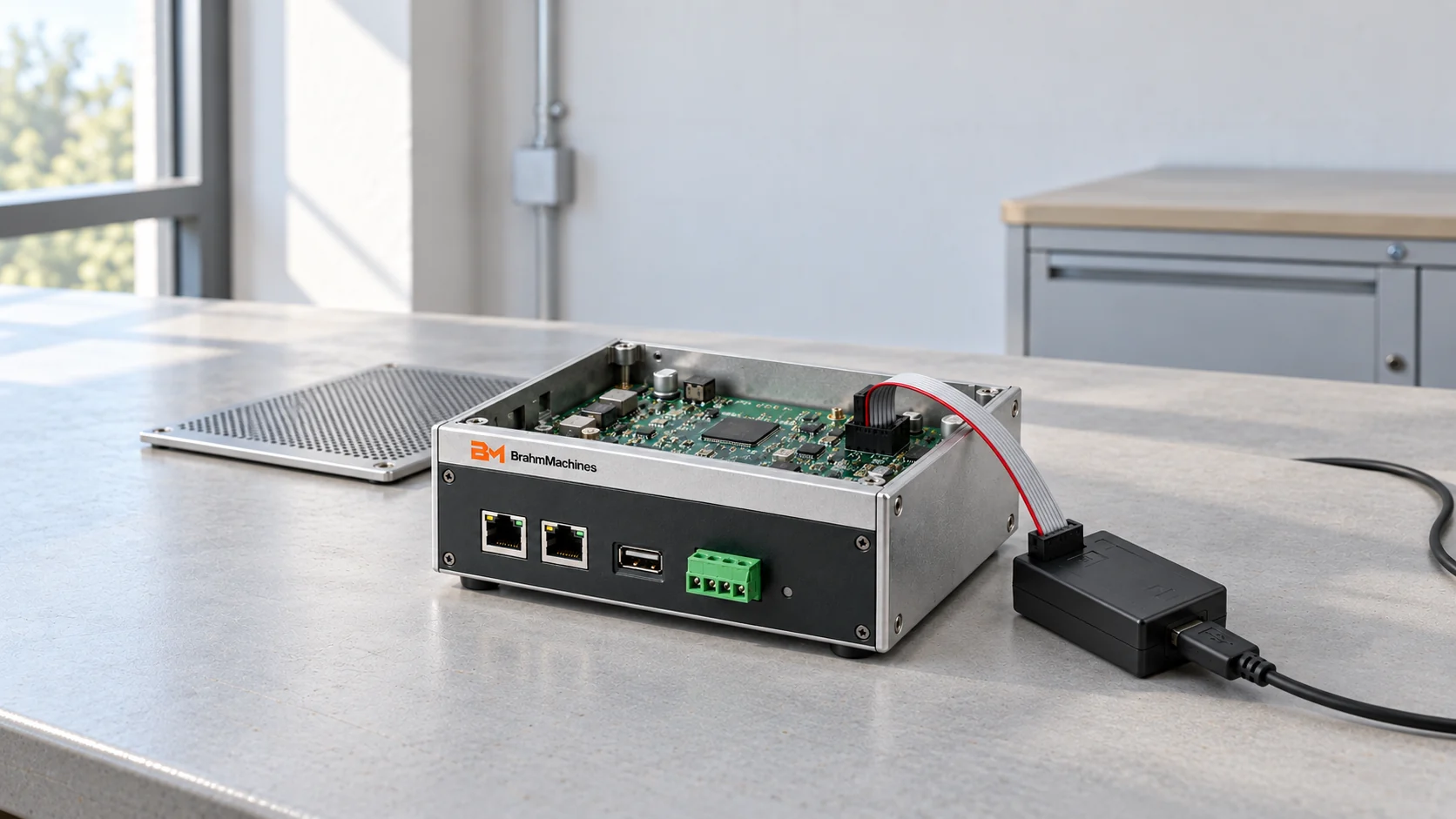
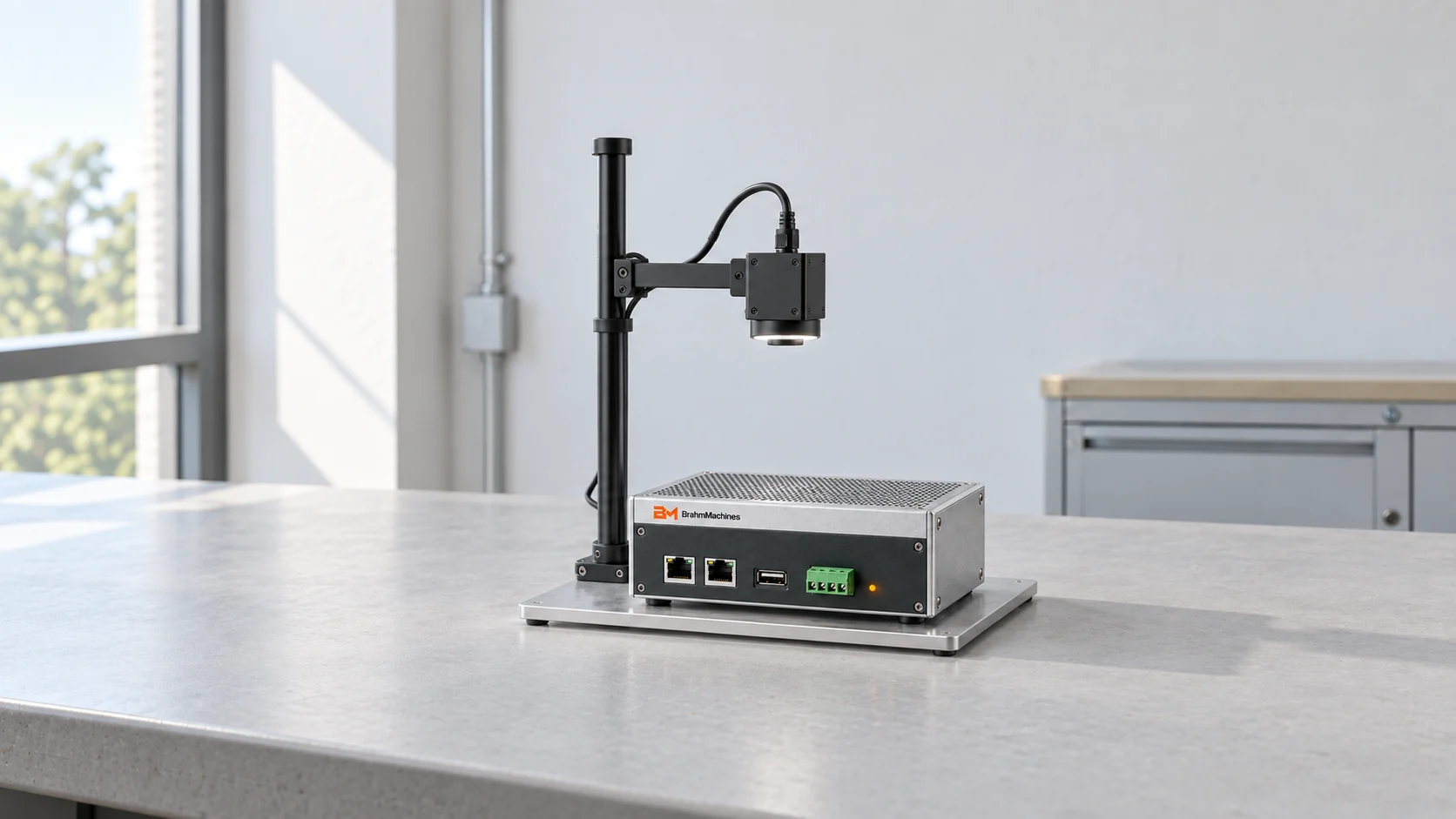
Gateway located in a reusable precision fixture, concept viewPALLET + FIXTURE / CONCEPT DETAIL
COMMON INTERFACE. SPECIFIC TOOLING.

Change the fixture.
Keep the foundation.

Product dimensions, connectors and tests will vary. The proposed architecture separates that variation from the reusable station.

Mechanical datums, utility connections, station identity and safety interfaces must all be engineered and validated. Plug-and-play is a design goal, not a claim of universal compatibility.

THE CELL FAMILY

Six capabilities.
One connected process.

ENGINEERING BEFORE SCALE

Flexibility needs
clear boundaries.

Our first scope is indoor, low-voltage, non-safety-critical electronics.

Product fit, fixture design, risk assessment, guarding, testing and release criteria are defined before a pilot. Certification, autonomous production and guaranteed changeover times are not implied by these concepts.

FROM ARCHITECTURE TO A PILOT

Define the evidence for your product.

Connect this concept to an agreed electronics pilot production scope. Use the guides to prepare the product, the tests and the unit record.

GUIDE / 01

An electronics pilot production checklist

Before a pilot, agree the product revision, build instructions, firmware, test limits and release criteria. A working prototype is the starting point; the pilot should establish whether another person can build and verify the same product from controlled information.

Read the guide
GUIDE / 03

What belongs in an electronics production record?

A useful production record connects a unit’s identity to the process that built and checked it. Retain the relevant product and recipe revisions, operation results, failed attempts, rework and release decision so the history remains understandable after the batch leaves the bench.

Read the guide
START WITH ONE PRODUCT

What are you
building next?

Bring the working electronics.
Let's define the process around them.

Discuss your pilotNo machine purchase required to start a conversation.